

Have you ever felt frustrated when unpacking your toothbrush bag on a trip and couldn't find your toothpaste or it leaked all over? Poor design can turn simple tasks into major headaches.
A well-designed toothbrush bag with layered organization, waterproof material, and optimal size helps you find items quickly, prevents leaks, and saves space in your suitcase—all of which improve travel efficiency and mood.
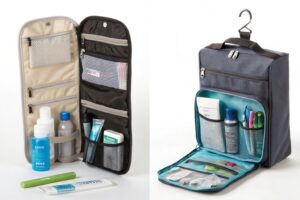
But what exactly makes a toothbrush bag good or bad? Below, I’ll break down three key aspects that can prevent travel disasters and make your journey smoother.
How Does Layered Design Solve the Problem of Searching for Items?
Ever been in a rush at an airport and struggled to find your toothbrush in a messy bag? That's a common pain point, and layered design can help.
Layered compartments, like mesh pockets, elastic straps, and dry/wet separation sections, keep items in place and make them easy to find. Studies show that layered bags can help locate items 60% faster than single-compartment ones.
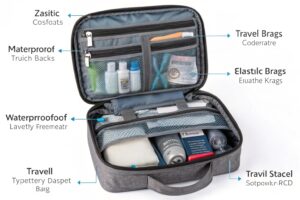
Types of Layered Design and Their Benefits
| Design Type | Best For | Drawbacks |
|---|---|---|
| Elastic Straps | Securing bottles and jars | Not ideal for irregular items |
| Transparent Mesh | Quick access to small items | Less durable and can tear |
| Magnetic Foldable | Saving space by folding | Higher cost |
I once used a single-compartment bag, and the toothpaste lid opened, spilling everywhere and ruining my travel clothes. Since then, I’ve switched to a sandwich-style design:
- Top Mesh Pocket: For daily essentials like toothbrush and toothpaste
- Middle Waterproof Layer: To keep liquid toiletries separated and secure
- Bottom Zippered Bag: For extra items like razors or wipes
This setup helps me find what I need in just 10 seconds, even in dim hotel lighting, and is especially useful after long flights when you’re exhausted and need things quickly.
Why Is Waterproofing More Important Than You Think?
Have you ever opened your suitcase after a flight and found your shampoo leaking all over your clothes? That kind of accident can ruin your travel day.
Waterproof inner lining with TPU material and sealed zippers can completely prevent leaks, avoiding damage to other belongings. Tests show that regular bags have a 7 times higher leak risk than waterproof ones.
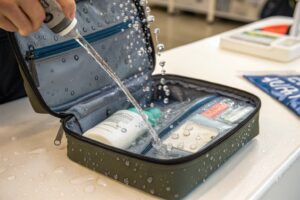
Different Waterproofing Methods and Their Effectiveness
| Method | Cost | Suitability | Real-Life Experience |
|---|---|---|---|
| Regular Polyester | Low | For short trips or solid items | A friend had lotion leak on a train |
| PVC Coating | Medium | For occasional liquid items | My coated bag cracked after a few years |
| Heat-Sealed TPU | High | For long trips or multiple liquids | My TPU bag withstood turbulence without leaking |
Once, on a tropical trip, my cheap bag was damaged by sunscreen, causing everything inside to stick together. I had to throw away the whole bag. Now I make sure to:
- Choose fully sealed models (zippers with silicone strips)
- Package liquids separately (use contact lens cases for lotions)
- Check for wear and tear regularly (especially around seams)
These small choices have made a huge difference in my travel experience and saved me from unnecessary stress.
How Does Size Choice Affect Suitcase Efficiency?
Have you ever chosen a huge toothbrush bag just to carry more items, only to realize it takes up half your suitcase? It’s a common mistake, but one that can be avoided.
An ideal toothbrush bag should be 20cm (length) × 15cm (height) × 8cm (thickness), allowing it to stand upright in the corners of your suitcase and save 20% of space while holding enough for 7 days.
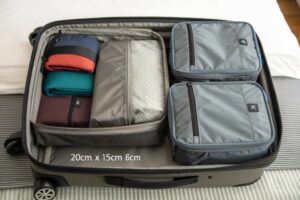
Recommended Sizes Based on Travel Duration
| Travel Days | Recommended Capacity | Sample Items You Can Fit | Consequences of Poor Choice |
|---|---|---|---|
| 1-3 days | 0.5 liters | Toothpaste, soap, travel-sized samples | Large bag may cause items to shift |
| 3-7 days | 1.2 liters | Full-sized shampoo, toothbrush, face cream | Too small may require extra bags |
| 7+ days | 2 liters | Full-sized skincare, hair dryer, curling iron | May exceed carry-on size, requiring checked baggage |
I learned this the hard way when I brought a cylindrical toothbrush bag, which didn’t fit into the corners of my suitcase and wasted space intended for shoes. Now I follow these recommendations:
- Measure the unused space in your suitcase (usually around 18cm high)
- Choose flat, rectangular shapes (to fit into gaps)
- Leave 10% extra space (in case you buy more items at the airport)
These tips help me pack smarter and travel lighter, making every journey more organized and stress-free.
Conclusion
The design of a toothbrush bag—layered organization, waterproof material, and proper size—directly impacts how easy your travel is. Choosing the right design makes a big difference.